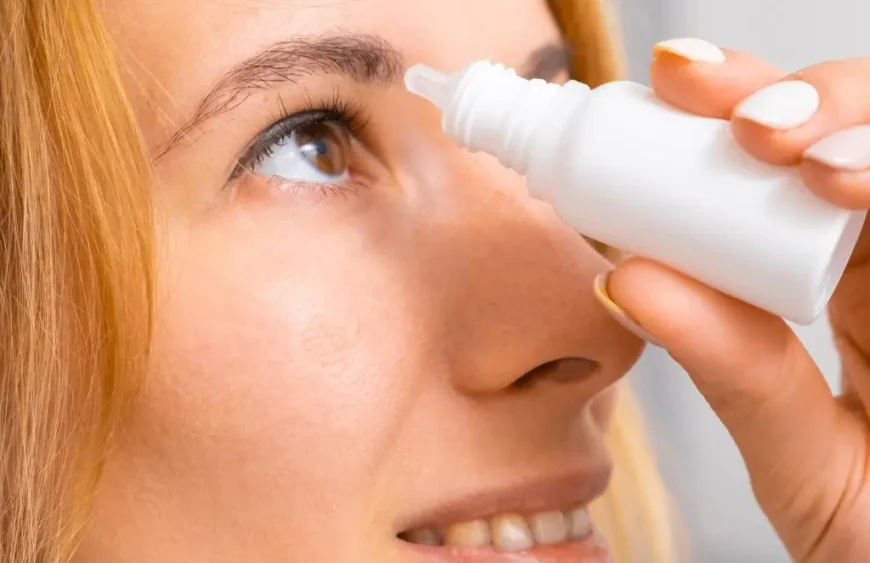
DMSO eye drops: A promising remedy for myopia?
The search for effective treatments for nearsightedness (myopia) leads us to a variety of approaches, from glasses and contact lenses to surgery. More recently, however, another remedy has crept into the discussion: DMSO (dimethyl sulfoxide) in the form of eye drops. This substance, known for its anti-inflammatory and pain-relieving properties, is now also being studied in the context of eye health. But how effective is DMSO really in treating nearsightedness? This article provides a comprehensive overview of the use of DMSO eye drops, their potential benefits, and the scientific evidence that supports their effectiveness.
History and discovery of DMSO
DMSO was first synthesized in the 1860s, but its potential medical use was not recognized until the 1960s. Originally used as a solvent, researchers discovered its therapeutic properties, including its ability to Tops and act as a carrier for other drugs. In medicine, DMSO has since been used for a number of applications, particularly for the treatment of pain and inflammation.
Mechanism of action of DMSO
DMSO works at the cellular level primarily through its anti-inflammatory properties. It reduces swelling and pain by increasing the permeability of cells to certain chemicals and serves as an antioxidant that neutralizes free radicals. These properties make it theoretically interesting for the treatment of eye diseases that can be influenced by inflammation and oxidative stress factors.
DMSO in the treatment of myopia
The idea of using DMSO to treat myopia is based on the hypothesis that its deep penetrating and cell-regenerating properties could have a positive effect on the structure of the eye. However, research in this area is still in its early stages and there are no extensive clinical studies to date that clearly demonstrate the effectiveness of DMSO eye drops for myopia.
Scientific studies and evidence
Some preliminary studies have investigated the use of DMSO for other eye conditions, such as uveitis (a form of eye inflammation), but there is no specific research yet that directly addresses myopia. However, scientists are optimistic that the anti-inflammatory and antioxidant properties of DMSO could potentially be useful in slowing the progression of myopia.
Case studies and user reports
There are isolated reports of users who have used DMSO eye drops for their myopia, but these are anecdotal and not scientifically validated. These reports suggest some improvement in visual acuity and a reduction in eye strain, but such personal experiences should be viewed with caution as they are not supported by controlled studies.
Expert statements
Ophthalmologists and researchers stress the need for further research to validate the safety and effectiveness of DMSO eye drops. While the theoretical benefits are promising, experts caution against using DMSO without the recommendation and supervision of a qualified medical professional.
Comparative analyses with other treatments
Compared to established treatments such as glasses, contact lenses or refractive surgery, DMSO remains an unconventional and largely unexplored option. The established methods have been shown to provide corrections or improvements in visual acuity, while the use of DMSO has not yet been sufficiently backed up by studies.
Future prospects
The future of using DMSO eye drops to treat myopia depends heavily on the conduct of comprehensive clinical trials. These trials would need to thoroughly evaluate the safety, efficacy, and potential side effects of DMSO in order to make an informed medical recommendation.
FAQ
Question: Is it safe to use DMSO eye drops? Answer: DMSO is approved for some medical uses, but its use in the eye is not recommended without medical supervision and may cause unpredictable side effects.
Question: Can DMSO cure myopia? Answer: There is no scientific evidence to prove that DMSO can cure myopia. Research is still in a very early stage.
Question: Where can I buy DMSO eye drops? Answer: DMSO is commonly available as a solvent, but specific formulations for ocular use should only be used under medical supervision.
Conclusion
Although DMSO has interesting properties that could theoretically be helpful in treating myopia, it is important to wait patiently for the results of further scientific research. Individuals interested in using DMSO should only do so under the guidance of a medical professional and rely on established treatment methods until more information is available.
Tags: DMSO, eye health, nearsightedness, myopia, natural treatments, eye drops, visual health, anti-inflammatory, antioxidant therapy, dimethyl sulfoxide, medical research, eye care, vision improvement, alternative medicine.